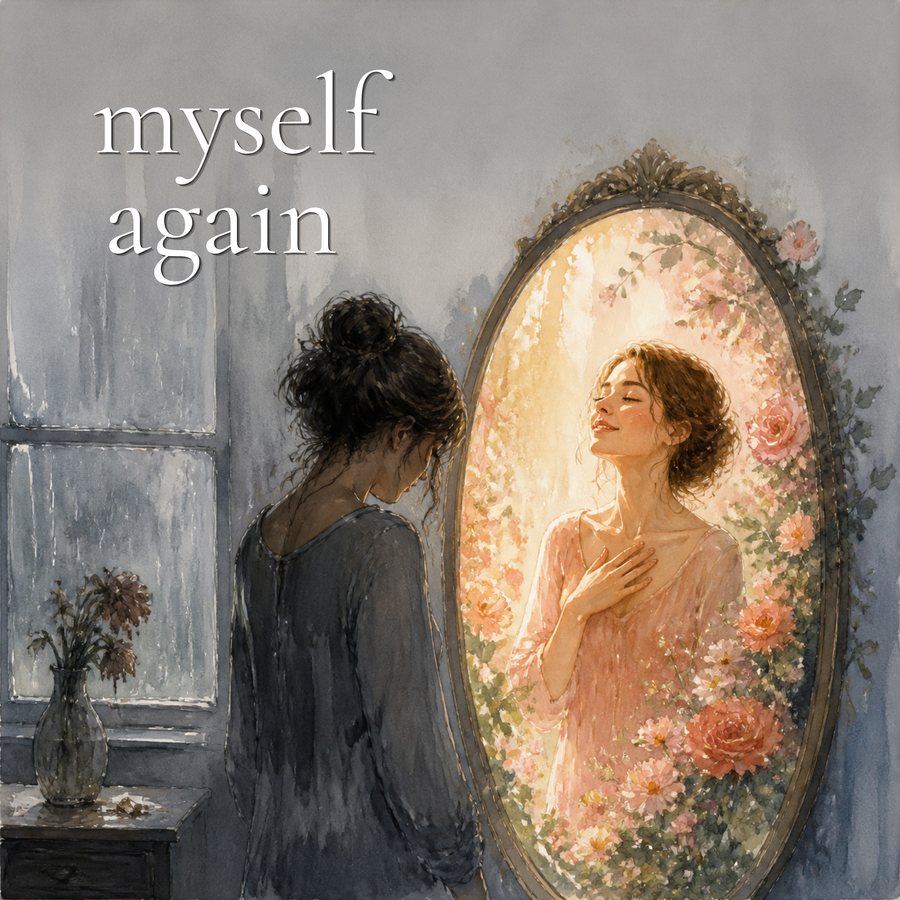
Concept
The idea for "Myself Again" started from a conversation about two songs that pull in opposite directions. "Total Eclipse of the Heart" makes heartbreak feel like the end of the world: dramatic, desperate, almost operatic. "I Will Survive" answers heartbreak with "I don’t need you." There are many songs about losing love, but few about what comes after: healing, and finding your way back to yourself. That became my direction: the size and drama of the first song, pointed toward that way back. I built the track around a reflective vocal and a steady, modern groove.
The story
A different question
The first project taught me how to finish a song, and the second one pushed me toward a different question: what actually gives a track its feeling. This project was a collaboration with singers.
I promised myself that this time I wouldn’t open FL Studio and start clicking tools randomly anymore. Before the production began, I sat down with Minh Anh, the first singer, to talk about the direction the song should take. I wanted to understand how that voice would sit inside the sound world we were about to build.
One step backward, two steps forward
The path from that idea to a finished song was not straight. I wrote melodies and threw them out, swapped one synthesizer layer for another, and kept changing how sections developed. Some nights I stayed up late adjusting every single sound bar. This time I tried out some new "toys" that FL Studio gave me. I used reverb to open up space, and delay to let sounds ring on after a line had already ended. I also learned a new technique: a short interlude made from the singer’s own voice, stretched through delay, so the song could breathe more naturally between sections.
June 24
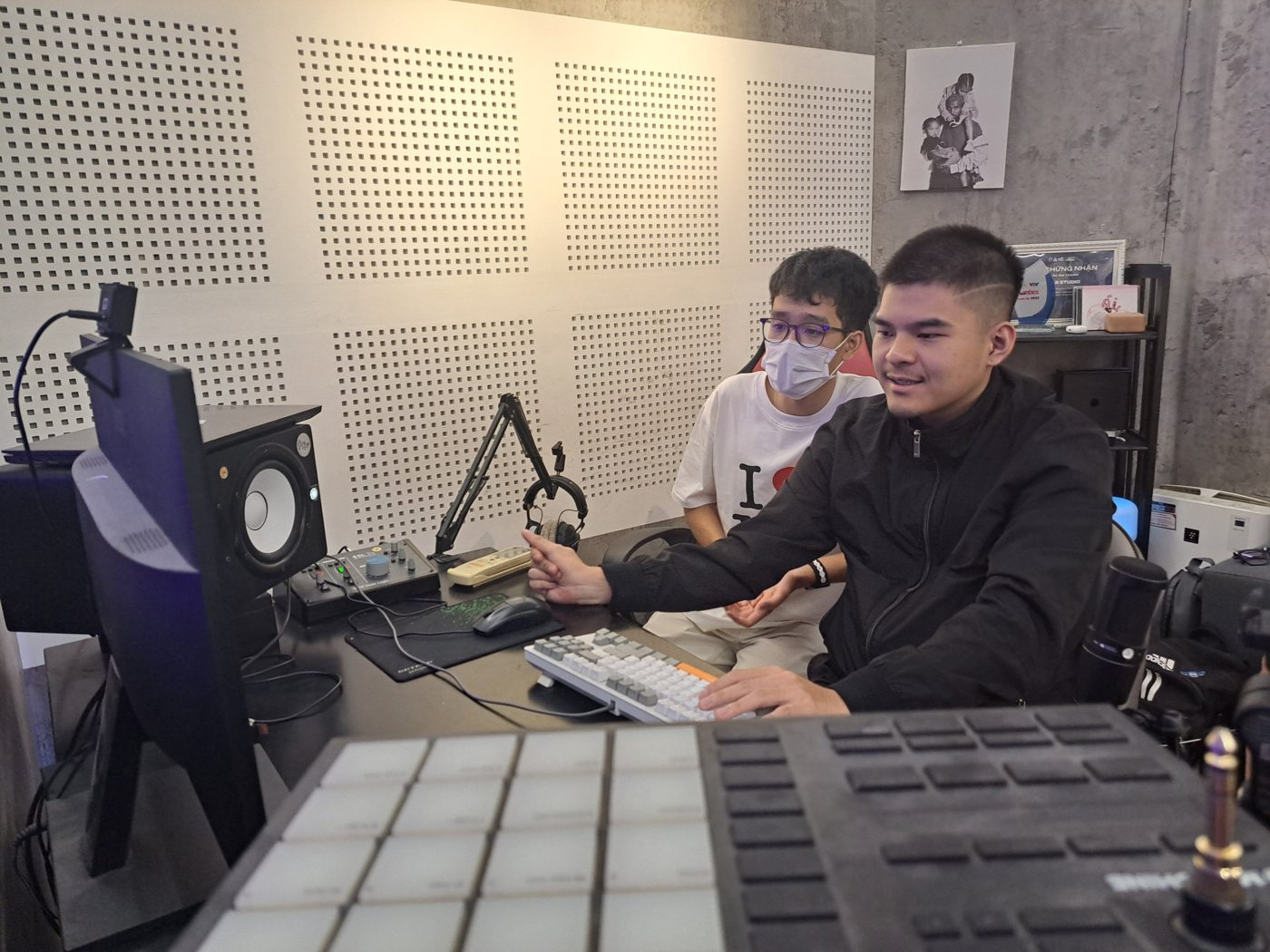
The first recording at 29Lab
I still made basic mixing mistakes, the kind any beginner makes. Luckily, the people at the studio I chose this time were supportive and patient with me. When I got stuck, they explained what was going wrong, and I went back to my session and fixed it myself. Every tip they gave me about mixing and mastering went straight into my own work.
Every sound in its place
Mixing taught me that every sound needs its own place. When several layers play together, the point is not for each one to stand out. The point is for each layer to know when to step forward and when to fall back.
When I finally reached the mastering stage, I understood that making a song louder was never the real goal.
July 15
The re-record
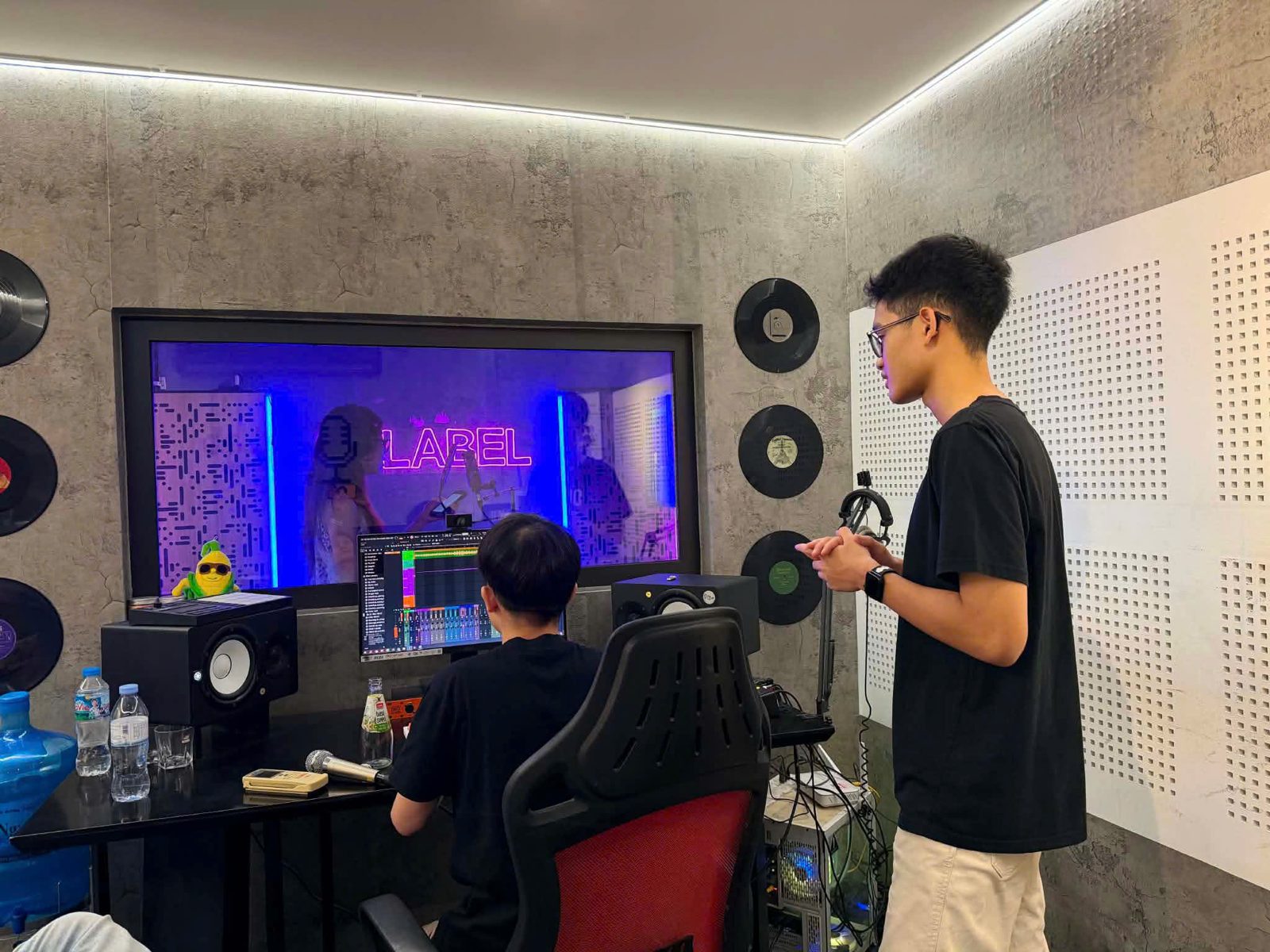
After the first session, I could have called the song finished. Every time I listened back, though, the voice wasn’t carrying the theme. A song about the journey from heartbreak to healing needed more power. Around that time, Bonnie Tyler passed away, and listening to her again reminded me how much a single voice can hold a song together. I decided to reopen a stage I thought was already closed, and asked Hien Anh Tran, who had also co-written the lyrics, to record the vocals for the final version.
How I made it
What I did
I was the primary producer and was responsible for the concept as a whole. I composed the instrumental parts and produced the beat. I also arranged the song and edited the MIDI and audio material. I directed the vocals and completed the final mix and master.
I co-wrote the lyrics with the two singers, Minh Anh and Hien Anh Tran. I treated each singer as a creative collaborator, although the responsibility for the production remained mine. Before recording, I explained the emotional direction I wanted for each section, and described the phrasing and the rhythmic placement. After recording, I selected the final vocal material and edited it to fit the beat and the song form.
The work was done in FL Studio, and the main material was MIDI patterns and edited audio loops. The base is layered drums and percussion, together with a bass line. Guitar notes and synths appear occasionally. Fills and transition effects add energy, while the main groove stays the same throughout.
The song
The song opens quietly with a repeated line, "Back to myself again." This short intro states the central idea. Verse 1 starts at about . Its lyrics describe how the relationship damaged the narrator’s confidence and her sense of who she was, and the restrained arrangement keeps her voice clear.
Pre-Chorus 1 begins near . Here the mood changes: she stops accepting who he told her to be. The first chorus arrives at about and brings the first clear rise in energy. Longer vocal phrases carry the lines "I found my own way back" and "I’m choosing myself this time," and the fuller rhythm section gives these lines more weight. One of the strongest points of the music comes at about .
Verse 2 begins at about with a rap-influenced vocal style. The short, fast lines feel different from the long notes in the chorus. The lyrics also move the story forward: the narrator has left the relationship and has begun to rebuild her identity through her own choices.
Pre-Chorus 2 returns at about . The words are the same, but after the rap section they sound more certain. The final chorus starts near and is the main emotional climax. A full instrumental arrangement supports the vocal, and the repeated statements of independence sound firmer. The strongest passage falls between and .
The outro begins near and returns to the quiet sound of the intro. Its central phrase changes from "Back to myself again" to "Back to my own light." The last line, "I lost you, but I found me," shows she has changed. The instrumental layers are lowered slowly until the song ends at .
Mixing and mastering
I kept the lead vocal clear and upfront, and used panning automation at the beginning to move the whisper between the left and right channels, while creating space for the supporting instruments.
I mastered the song in a separate FL Studio project, starting from the exported WAV of the mix. This stage had two aims: an even tonal balance and a steady listening level, and keeping the contrast in volume between the quiet and loud sections. I made small changes to the stereo image and lowered the highest peaks. A final limiter stopped the signal from clipping. Last, I compared the quiet sections with the fuller ones, so that the song would sound like one piece from the first bar to the last.
What I learned
Now I understand something about working with a singer. In front of me was no longer a set of notes or layers I could move around freely. There was a person, with a particular voice, a particular emotion, and a particular way of expressing both. One more important thing I have learned is to listen.